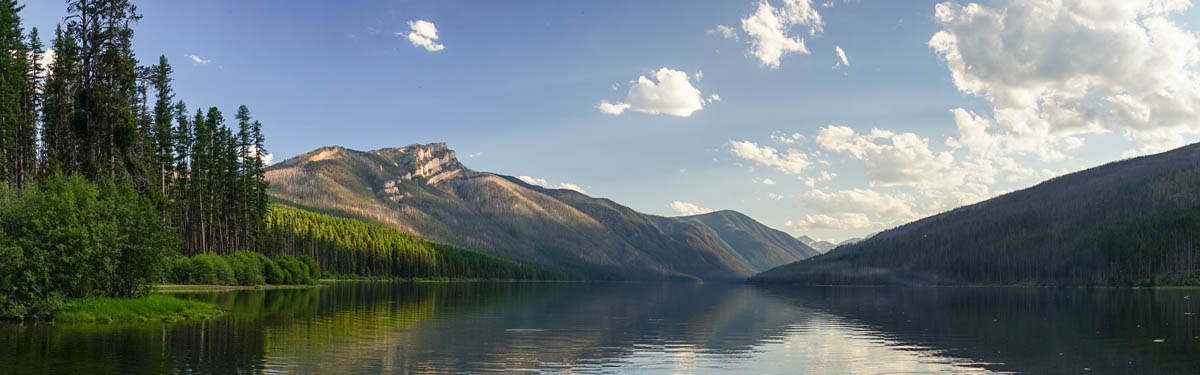
Introduction
The United States Congress designated the Eagles Nest Wilderness (
map) in 1976 and it now has a total of
133,471 acres.
All of this wilderness is located in
Colorado and is managed by the Forest Service.
Description
Heavy snow accumulates on the heights of Eagles Nest Wilderness in the Gore Range, providing a major contribution to the waters of the Colorado River. Melting snow in spring plunges from the heights to create marshy meadows and sloughs, as well as turbulent thundering creeks when temperatures soar abruptly. This is an area more vertical than horizontal, with sheer rock faces, keen-edged ridges, deep valleys, jagged peaks, and dense forests lower down, and foot travel can be strenuous. Approximately 180 miles of trail provide access to Eagles Nest, most of them dead-ending at a radiant gem of an alpine lake. Two trails, at the northern and southern extremes, cross entirely from one side of the Wilderness to the other side: Upper Cataract Lake to Piney Lake across the north, a distance of 15 miles; and Gore Creek to Red Buffalo Pass to Uneva Pass across the south, a distance of about 19 miles. Off-trail hiking can be difficult, but several informal routes climb the steep passes of the area's craggy core.