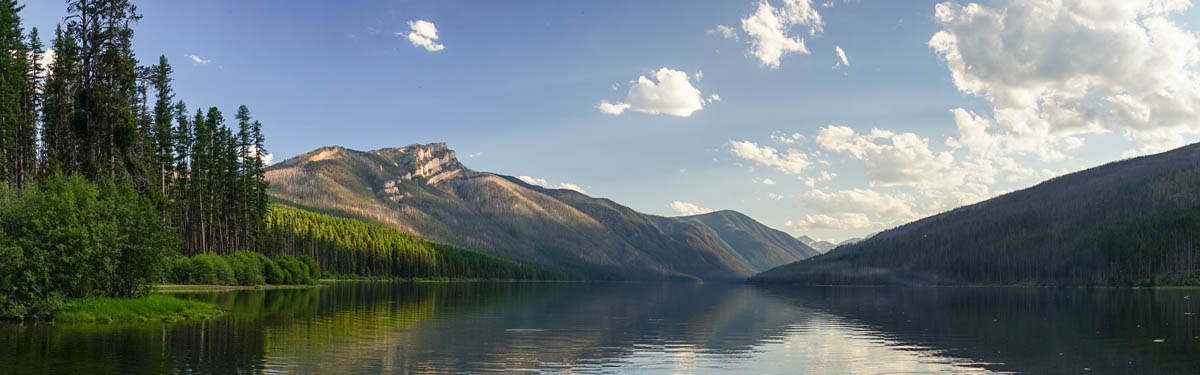
Little Frog Mountain Wilderness
Introduction
The United States Congress designated the Little Frog Mountain Wilderness (map) in 1986 and it now has a total of 4,666 acres. All of this wilderness is located in Tennessee and is managed by the Forest Service.Description
Little Frog Mountain Wilderness, now covered in second-growth forest, encompasses a horseshoe-shaped valley, Pressley Cove. It is formed by Little Frog Mountain on the southeast and Dry Pond Lead on the northwest. Panoramic views are the main attraction atop Sassafras Knob near the northern boundary, the highest point in the area at 3,322 feet. The terrain bottoms out at approximately 1,200 feet near the Ocoee River, which flows just outside the southern boundary. You'll see flame azalea, mountain laurel, rhododendron, trailing arbutus, crested dwarf iris, mayapple, bloodroot, toothwort, magnolia, dogwood, redbud, and many other flowering plants, shrubs, and trees.The Rock Creek Trail, the only path here, winds through the heart of the Wilderness for 5.5 miles into the valley of Pressley Cove. Just outside the Wilderness, the Dry Pond Lead Trail follows the northwestern boundary for 4.5 miles along well-forested Dry Pond Lead.
Planning to Visit the Little Frog Mountain Wilderness?
- Print a fact sheet
- General things to consider when visiting any wilderness
- Regulations
- Contact the Forest Service
Leave No Trace
How to follow the seven standard Leave No Trace principles differs in different parts of the country (desert vs. Rocky Mountains). Click on any of the principles listed below to learn more about how they apply in the Little Frog Mountain Wilderness.- Plan Ahead and Prepare
- Travel and Camp on Durable Surfaces
- Dispose of Waste Properly
- Leave What You Find
- Minimize Campfire Impacts
- Respect Wildlife
- Be Considerate of Other Visitors