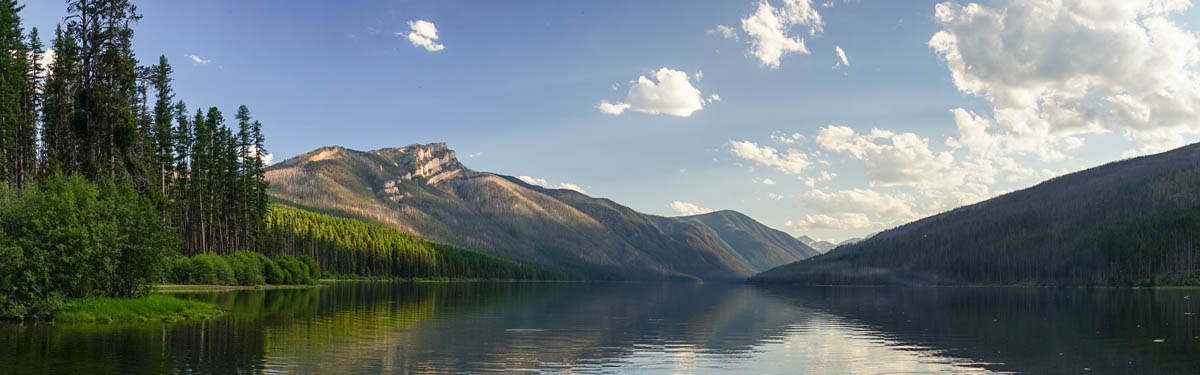
Bell Mountain Wilderness
Introduction
The United States Congress designated the Bell Mountain Wilderness (map) in 1980 and it now has a total of 9,143 acres. All of this wilderness is located in Missouri and is managed by the Forest Service.Description
Named for a family that once farmed here, Bell Mountain protects a predominately oak-hickory forest interspersed with pine and elm, scattered grassy glades with lichen-covered granite outcroppings, and a diversity of plant species usually found in old-growth forests. Shut-In Creek, a year-round spring-fed run of water with several gorges ("shut-ins") crosses the area between steep talus slopes. The elevation peaks at 1,702-foot Bell Mountain, then falls to 970 feet at Joe's Creek, another small perennial stream. White-tailed deer, turkeys, and squirrels call this home, but not in abundance. They share the area with pileated woodpeckers, woodthrush, and ovenbirds, all of which thrive in a mature forest.A maintained pathway, the Bell Mountain Trail, crosses the Wilderness from north to south for approximately six miles and joins a small section of the Ozark Trail in the southwestern corner of the area. When completed, the Ozark Trail will run from Saint Louis, Missouri, to the Arkansas border, where it will join the Ozark Highlands Trail. Another route, the Lindsey Mountain Trail in the southeastern portion, climbs almost 2.5 miles one-way to a dead end on Lindsey Mountain, the second highest point in the Wilderness.
Planning to Visit the Bell Mountain Wilderness?
- Print a fact sheet
- General things to consider when visiting any wilderness
- Regulations, Permits
- Contact the Forest Service
- Visit the National Forest wilderness website
Leave No Trace
How to follow the seven standard Leave No Trace principles differs in different parts of the country (desert vs. Rocky Mountains). Click on any of the principles listed below to learn more about how they apply in the Bell Mountain Wilderness.- Plan Ahead and Prepare
- Travel and Camp on Durable Surfaces
- Dispose of Waste Properly
- Leave What You Find
- Minimize Campfire Impacts
- Respect Wildlife
- Be Considerate of Other Visitors