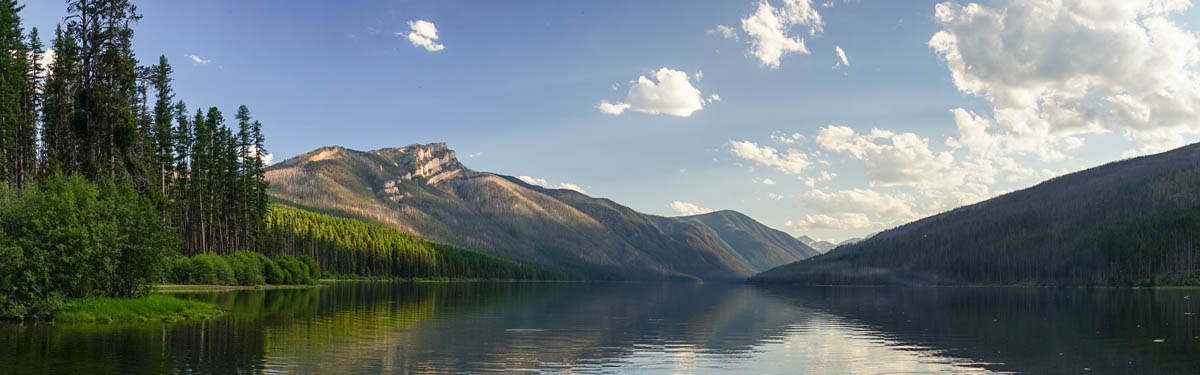
Rattlesnake Wilderness
Introduction
The United States Congress designated the Rattlesnake Wilderness (map) in 1980 and it now has a total of 32,976 acres. All of this wilderness is located in Montana and is managed by the Forest Service.Description
The southern boundary of the Rattlesnake National Recreation Area and Wilderness (RNRAW) is located four miles north of Missoula, Montana. The National Recreation Area (NRA) lies south and adjacent to the wilderness and receives heavy public use, primarily in the South Zone which is within the first three miles of the main trailhead. Far fewer people venture into the Rattlesnake Wilderness which is located in the remote and rugged northern portion of the RNRAW. A road that is closed to public motorized use and that is used as a trail leaves the main trailhead and travels into the National Recreation Area along the Rattlesnake Creek corridor and provides access to the Wilderness boundary. The northern boundary of the wilderness borders the South Fork Jocko Tribal Primitive Area which is open only to tribal members.The Rattlesnake Wilderness is characterized by scenic lakes and mountain peaks. Elevations in the RNRAW range from 3,600 feet at the southern NRA boundary to 8,620 feet at McLeod Peak.
Eight trailheads provide access to the RNRAW. Camping and campfires are restricted in the south zone of the NRA but are allowed in the wilderness. Some of the small lakes and lake access trails are closed to livestock to protect sensitive riparian areas. Rattlesnake Creek is also a municipal watershed for the City of Missoula and several of the lakes in the upper wilderness are dammed and maintained by the local water company. Visitors are advised not to camp near water sources.
Deer, elk, coyotes, mountain goats, bighorn sheep, black bears, grizzly bears, moose, and mountain lions reside in the Rattlesnake. Birds include eagles, hawks, ospreys, and wide variety of songbirds. Most of the wilderness lies in the Northern Continental Divide Grizzly Bear Recovery Area. Grizzly bears, while not common, are regularly reported as being seen in the upper Wilderness. Wildlife attractant/food storage is required in all of the RNRAW.
Planning to Visit the Rattlesnake Wilderness?
- Print a fact sheet
- General things to consider when visiting any wilderness
- Regulations, Permits
- Contact the Forest Service
Leave No Trace
How to follow the seven standard Leave No Trace principles differs in different parts of the country (desert vs. Rocky Mountains). Click on any of the principles listed below to learn more about how they apply in the Rattlesnake Wilderness.- Plan Ahead and Prepare
- Travel and Camp on Durable Surfaces
- Dispose of Waste Properly
- Leave What You Find
- Minimize Campfire Impacts
- Respect Wildlife
- Be Considerate of Other Visitors