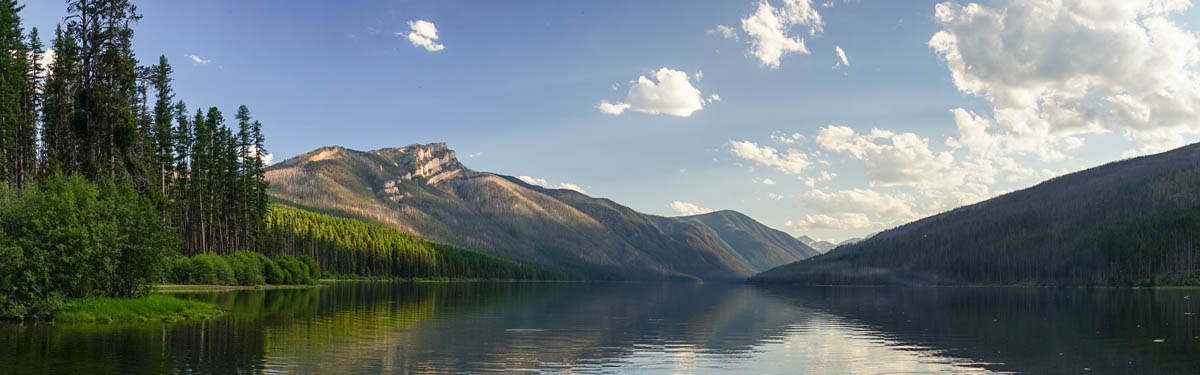
Cabinet Mountains Wilderness
Introduction
The United States Congress designated the Cabinet Mountains Wilderness (map) in 1964 and it now has a total of 94,272 acres. All of this wilderness is located in Montana and is managed by the Forest Service.Description
The Cabinet Mountains Wilderness is located in northwestern Montana and administered by the Kootenai National Forest. Originally declared a Primitive Area in 1935, it was reclassified in 1964 with the passage of the Wilderness Act. The Cabinets derived their name from early French explorers who observed that the mountains resembled a series of closets or cabinets.Encompassing over 94,000 acres, the area includes more than 36 hiking trails, 85 small lakes (many of them stocked with fish), ridgetop panoramas, and alpine meadows. The numerous drainages from this area flow into the Kootenai and Clark Fork Rivers, and elevations range from 2,500 feet at the base of Grambauer Mountain to 8,738 feet at Snowshoe Peak. The craggy peaks of the Cabinets reach a high point here, where the altitude translates into snowfall as late as July and as early as September. Huckleberries, wild blackberries, and thistleberries grow in abundance which are sweet treats for the few grizzlies still surviving here.
The vegetation also differs from what characterizes much of western Montana, a result of the much wetter climate. Many plant species hail from the Pacific Coast; giant Western Red Cedars in the moister valleys submit eventually to stunted health on the open ridges. The array of wildflowers is exemplary and supports species such as violets, lupine, trillium, buttercups, columbine, clematis, phlox, and Indian paintbrush to name a few. Elk are the primary game species but the area is also home to deer, moose, mountain goat, black bear, mountain lion, and numerous smaller animals.
Planning to Visit the Cabinet Mountains Wilderness?
- Print a fact sheet
- General things to consider when visiting any wilderness
- Regulations
- Contact the Forest Service
- Visit the National Forest wilderness website
Leave No Trace
How to follow the seven standard Leave No Trace principles differs in different parts of the country (desert vs. Rocky Mountains). Click on any of the principles listed below to learn more about how they apply in the Cabinet Mountains Wilderness.- Plan Ahead and Prepare
- Travel and Camp on Durable Surfaces
- Dispose of Waste Properly
- Leave What You Find
- Minimize Campfire Impacts
- Respect Wildlife
- Be Considerate of Other Visitors